
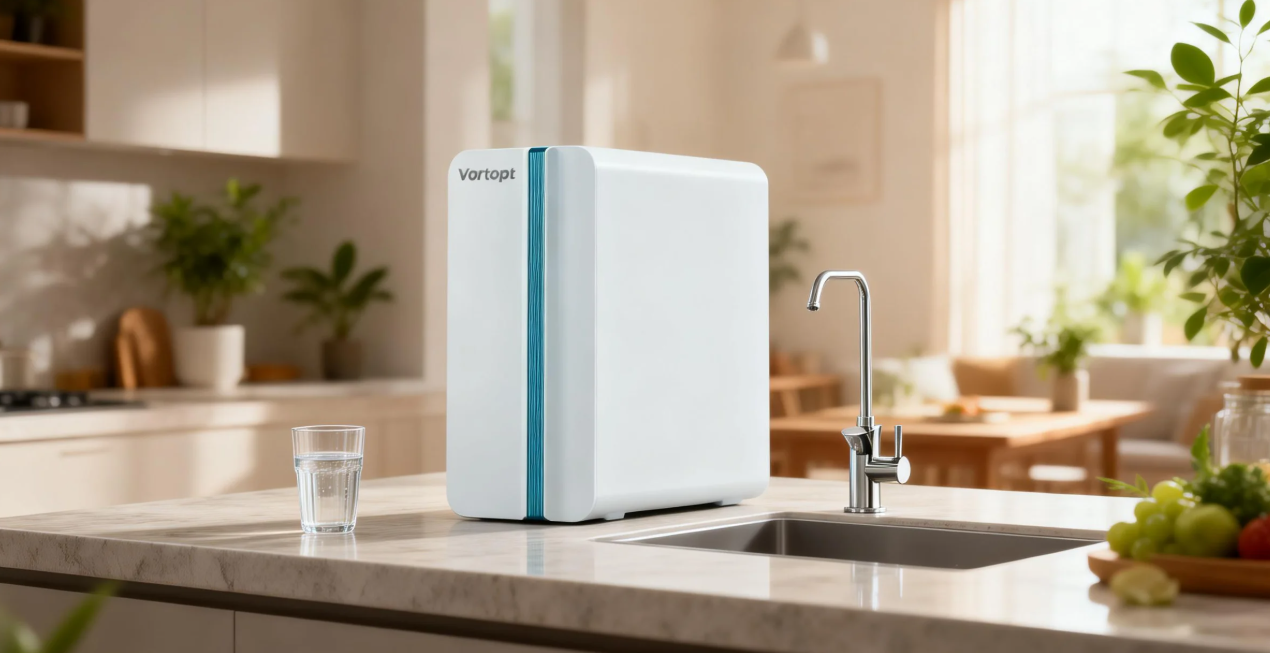
Why You Need a Water Purifier at Home
Amid the prevalent issues of industrial wastewater discharge and aging urban municipal pipe networks, a domestic water purifier is no longer a luxury, but a necessity to safeguard your family's health. Although tap water treated by waterworks meets basic standards, it may be contaminated with heavy metals such as lead and microplastics during transportation through miles of outdated pipelines.
Why settle for seemingly clear tap water when you can drink pure water? Installing a high-quality water purification system builds the final protective barrier at your kitchen faucet, increasing the safety factor of drinking water by a staggering 200%. Purified water is not just for quenching thirst; it removes 99.9% of pathogens from water, ensuring that every drop the elderly and children drink revitalizes their bodies rather than adding a chemical burden.
Water Purification Technologies and Core Parameters
To choose the right water purifier, you must understand its internal working principle. The core indicator you will encounter when purchasing is the Total Dissolved Solids (TDS) content, which refers to the total amount of all inorganic and organic substances such as calcium, magnesium, and nitrates suspended in water. Water with a high TDS value is usually "hard water", which forms limescale on the surface of electrical appliances and has a bitter metallic taste when drunk.
There are three core water purification technologies on the market, each targeting different water pollution problems with distinct focuses:
-
Reverse Osmosis (RO): It uses a semipermeable membrane to force water molecules through while intercepting larger pollutants. It is the gold standard water purification solution for areas with high TDS water quality, capable of reducing the TDS value of water by 90% or more, easily turning salty and hard water into sweet drinking water comparable to bottled water. 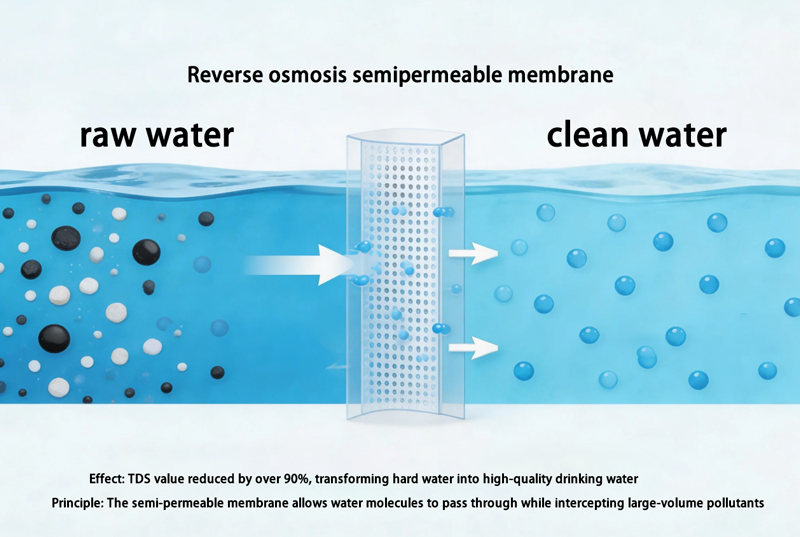
-
Ultraviolet (UV) Sterilization: It is equivalent to giving tap water a "sun bath". High-frequency rays emitted by UV lamps penetrate the DNA of bacteria and viruses, inactivating them and making them harmless to humans. This technology is essential if the water source at home is prone to microbial growth and the natural mineral content in the water is low. 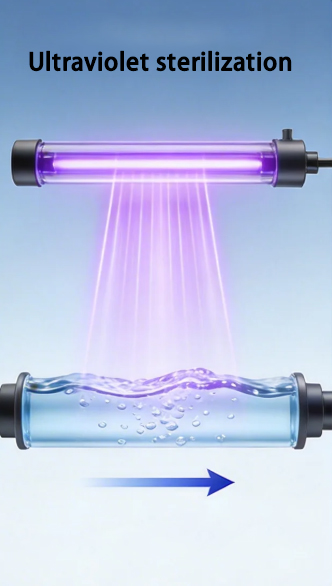
-
Ultrafiltration (UF): It adopts hollow fiber membrane filtration and requires no electricity. It can remove cysts and large particulate impurities from water while retaining natural minerals in it. It is the most cost-effective choice when urban tap water has undergone preliminary treatment and only needs final deep purification.
| Water Purification Technology | Applicable Scenarios | Core Advantages and Practical Effects |
|---|---|---|
| Reverse Osmosis (RO) | Water with high TDS value (>500ppm), well water or hard water | Removes heavy metals such as lead and arsenic, excess salts, and greatly improves water taste |
| Ultraviolet (UV) | Water with low TDS value, municipal tap water at risk of microbial contamination | No chemical agents required, instant sterilization, and retention of the balance of natural minerals in water |
| Ultrafiltration (UF) | Gravity water purification devices, areas with stable urban water supply | No electricity required, physical interception of cysts and sediments, no waste of purified water and wastewater |
Matching the Water Purifier to Your Lifestyle
Let's talk about the specific purchasing details next. Choosing a domestic water purifier is far more than just picking a brand; the key is to match the water purifier to the water usage rhythm of your kitchen. For a family of four, a water purifier with a 8-10 liter storage tank capacity is the most suitable, ensuring a supply of purified water even in the event of a power outage.
Water output speed of the water purifier: A model with a water output of 15 liters per hour is much more efficient than the basic 7-liter model. Why is this important? Because a large flow rate allows large-capacity cookware to be filled in a few seconds, saving you about 15 minutes of waiting time for water filling every day in total. If your residential area has a lot of sediment in the water, be sure to choose a water purifier equipped with a high-quality pre-filter. This small accessory can extend the service life of the expensive RO reverse osmosis membrane by 12 months, saving you hundreds of yuan in maintenance costs.
Do not ignore the "early warning system" of the water purifier either: professional-grade water purifiers are all equipped with a filter life indicator light. There is no need to judge whether the filter is invalid by the deteriorated taste of water; the indicator light will remind you in a timely manner when the water purification efficiency of the water purifier drops below 5%. This proactive early warning design ensures that every drop of water you drink is effectively purified.
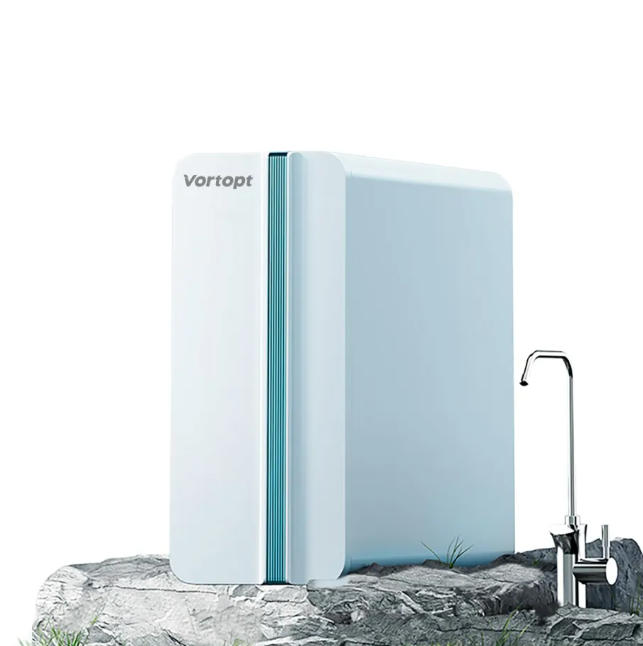
Recommend Vortopt DR5-1000G tankless reverse osmosis water purifier! 4-level precision filtration with 0.0001 micron Dow membrane, 3:1 low waste to water ratio, ultra water-saving, mineralization technology with added minerals such as calcium, magnesium, and zinc. Intelligent faucet displays TDS value and filter life, front suction core replacement is super convenient, NSF certification, high flow instant filtration and drinking, saving space in the kitchen and maximizing cost-effectiveness!
Frequently Asked Questions
Does reverse osmosis water purification remove minerals, and is long-term consumption harmful to health?
This is a common misconception. Although reverse osmosis technology removes minerals from water, most of the minerals the human body needs come from food, not drinking water. If you still have concerns about this, most new domestic water purifiers on the market are equipped with a mineralizer or a TDS value regulator, which can accurately supplement an appropriate amount of essential minerals such as calcium and magnesium, allowing you to enjoy both the purity of pure water and the nourishment of minerals.
Which water purifier should I choose if the water quality at home is hard?
For hard water (TDS value >500ppm), a reverse osmosis water purifier is the only effective choice, as ultraviolet and ultrafiltration filters cannot remove the dissolved salts that cause hard water. The reverse osmosis system can physically remove excess minerals from water, which not only reduces the risk of kidney stones but also restores the original flavor of brewed tea and coffee.
How often do the filters of a water purifier need to be replaced?
Generally speaking, the front sediment filter and activated carbon filter need to be replaced every 6-12 months, while the service life of the RO reverse osmosis membrane can reach 2 years, with the specific duration depending on the raw water quality. A water purifier equipped with an intelligent early warning system is the best choice for tracking filter life; such devices judge the filter status based on the actual volume of purified water, rather than simply calculating by the number of days of use.
Do water purifiers produce a large amount of wastewater?
Traditional reverse osmosis water purifiers do have a certain "wastewater ratio", but high-end new models on the market are all equipped with wastewater recycling technology, which can optimize the wastewater ratio to 1:1 or even higher. You can also collect the generated wastewater in a storage tank for mopping the floor and watering flowers, making your home life both healthy and environmentally friendly.